
Category: Uncategorized

  • Distressed Properties and How to Sell Them in India..

    Distressed Properties and How to Sell Them in India..

    The Indian property market has many categories, but one that’s gaining attention lately is distressed property. Whether you’re a homeowner facing financial hardship or an investor looking for undervalued assets, understanding how to sell distressed properties in India can help you recover value efficiently.

    What Is a Distressed Property?

    A distressed property is a real estate asset under financial or legal distress, meaning the owner is unable to meet loan obligations or maintain the property.

    Common Causes:

    -Home loan default leading to bank auction

    -Legal disputes or pending court cases

    -Inheritance complications

    -Severe property damage or lack of upkeep

    -Developer insolvency or bankruptcy

    Such properties are usually sold below market value to recover debt or settle financial liabilities.

    Types of Distressed Properties

    -Bank-Owned (REO)

    -Taken over by banks after loan default.

    -Pre-Foreclosure

    -Owner sells before bank seizes property.

    -Auction Property

    -Sold publicly by banks or courts.

    -Legal Dispute Property

    -Under litigation but sale allowed with disclosure

    How to Identify Distressed Properties in India

    -Bank auction portals (SBI e-auction, ICICI Auctions)

    -RERA disclosures for stalled projects

    -Insolvency or bankruptcy court orders

    – Local agents dealing in repossessed properties

    How to Sell Distressed Property Quickly

    -Get a professional appraisal

    -Clear legal title issues

    -Use distressed sale or auction platforms

    -Set competitive pricing (10–25% below market)

    -Maintain transparency in disclosures

    -Negotiate short sale options with lenders

    Tax Implications

    -Capital gains tax applies, but liability can be reduced using:

    -Indexation benefits

    -Section 54 exemptions

    -Loss carry-forward provisions

    Advantages for Buyers

    -Lower purchase price

    -Renovation-led appreciation

    -Strong negotiation power

    Legal Process

    -Obtain bank NOC

    -Execute registered sale deed

    -Disclose liabilities

    -Clear utility bills and property taxes

    FAQs

    -Can banks auction without owner consent?

    Yes, under the SARFAESI Act.

    -Are distressed properties safe?

    Yes, with due diligence.

    -Can I sell before foreclosure?

    Yes

    -Is GST applicable?

    Only for developer sales.

    -How long do auctions take?

    60–90 days.

    Conclusion

    Selling a distressed property in India requires strategic pricing, legal clarity, and fast execution. Transparency and professional guidance ensure better outcomes for both sellers and buyers.
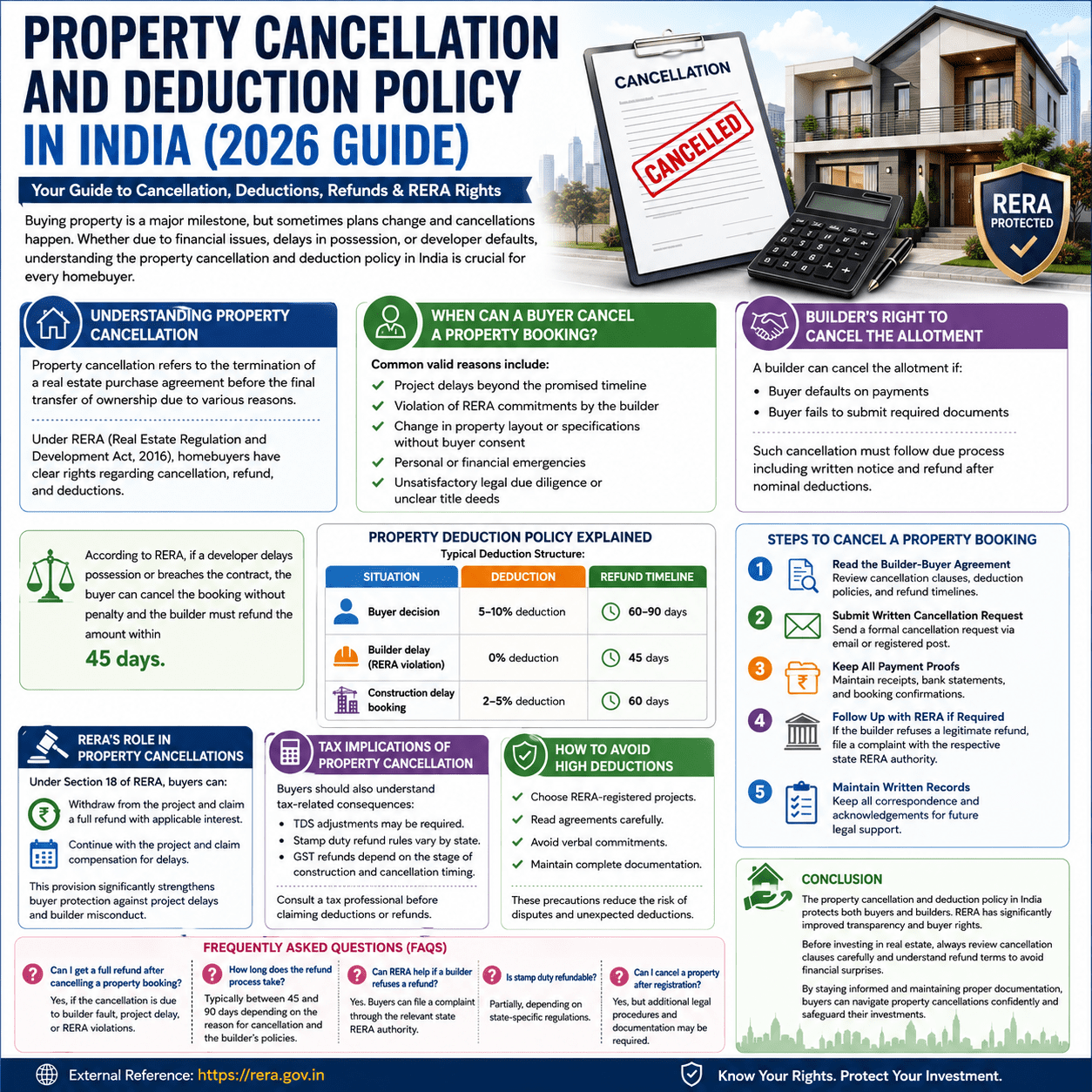
  • Property Cancellation and Deduction Policy in India (2026 Guide)

    Property Cancellation and Deduction Policy in India (2026 Guide)

    Buying property is a major milestone, but sometimes plans change and cancellations happen. Whether due to financial issues, delays in possession, or developer defaults, understanding the property cancellation and deduction policy in India is crucial for every homebuyer.

    This guide simplifies the legal, financial, and procedural aspects of cancelling a property purchase under Indian real estate laws and RERA guidelines.

    Understanding Property Cancellation in Real Estate

    Property cancellation refers to the termination of a real estate purchase agreement before the final transfer of ownership. The reasons may vary including delayed possession, false promises, or changes in personal finances.

    Under RERA (Real Estate Regulation and Development Act, 2016), homebuyers have clear rights regarding cancellation, refund, and deductions.

    When Can a Buyer Cancel a Property Booking?

    Common valid reasons include:

    • Project delays beyond the promised timeline
    • Violation of RERA commitments by the builder
    • Change in property layout or specifications without buyer consent
    • Personal or financial emergencies
    • Unsatisfactory legal due diligence or unclear title deeds

    According to RERA, if a developer delays possession or breaches the contract, the buyer can cancel the booking without penalty and the builder must refund the amount within 45 days.

    Builder’s Right to Cancel the Allotment

    A builder can cancel the allotment if:

    • Buyer defaults on payments
    • Buyer fails to submit required documents

    Such cancellation must follow due process including written notice and refund after nominal deductions.

    Property Deduction Policy Explained

    Typical Deduction Structure:

    SituationDeductionRefund Timeline
    Buyer decision5–10% deduction60–90 days
    Builder delay (RERA violation)0% deduction45 days
    Construction delay booking2–5% deduction60 days

    Steps to Cancel a Property Booking

    1. Read the Builder-Buyer Agreement

    Review cancellation clauses, deduction policies, and refund timelines.

    2. Submit Written Cancellation Request

    Send a formal cancellation request via email or registered post.

    3. Keep All Payment Proofs

    Maintain receipts, bank statements, and booking confirmations.

    4. Follow Up with RERA if Required

    If the builder refuses a legitimate refund, file a complaint with the respective state RERA authority.

    5. Maintain Written Records

    Keep all correspondence and acknowledgements for future legal support.

    RERA’s Role in Property Cancellations

    Under Section 18 of RERA, buyers can:

    • Withdraw from the project and claim a full refund with applicable interest.
    • Continue with the project and claim compensation for delays.

    This provision significantly strengthens buyer protection against project delays and builder misconduct.

    Tax Implications of Property Cancellation

    Buyers should also understand tax-related consequences:

    • TDS adjustments may be required.
    • Stamp duty refund rules vary by state.
    • GST refunds depend on the stage of construction and cancellation timing.

    Consult a tax professional before claiming deductions or refunds.

    How to Avoid High Deductions

    Before booking a property:

    • Choose RERA-registered projects.
    • Read agreements carefully.
    • Avoid verbal commitments.
    • Maintain complete documentation.

    These precautions reduce the risk of disputes and unexpected deductions.

    Frequently Asked Questions

    – Can I get a full refund after cancelling a property booking?

    Yes, if the cancellation is due to builder fault, project delay, or RERA violations.

    – How long does the refund process take?

    Typically between 45 and 90 days depending on the reason for cancellation and the builder’s policies.

    – Can RERA help if a builder refuses a refund?

    Yes. Buyers can file a complaint through the relevant state RERA authority.

    – Is stamp duty refundable?

    Partially, depending on state-specific regulations.

    – Can I cancel a property after registration?

    Yes, but additional legal procedures and documentation may be required.

    Conclusion

    The property cancellation and deduction policy in India protects both buyers and builders. RERA has significantly improved transparency and buyer rights. Before investing in real estate, always review cancellation clauses carefully and understand refund terms to avoid financial surprises.

    By staying informed and maintaining proper documentation, buyers can navigate property cancellations confidently and safeguard their investments.

    External Reference: https://rera.gov.in